Contrary to what may be expected, babies need very little to enjoy the museum visit. In this series of posts I report on our visits to museums highlighting the enjoyments and challenges we encounter as museum visitors. In this post: Scheepvaartmuseum Amsterdam.
the Scheepvaartmuseum is one of the 12 national museums in the Netherlands. They have an impressive library and are part of the network of maritime museums across Europe. Their historic collection is characterised by the paintings, models, world maps, and objects related to shipping and sailing. They hold a first edition of the description of the first circumnavigation around the world from 1500s. The museum recommends the navigational instruments, the story of the whale, the VOC ship (a full size replica of Amsterdam a 18th Century cargo ship, very impressive!), the Junior audio tour, and various activities during the holidays (for instance a movie room in the winter) when visiting with children.
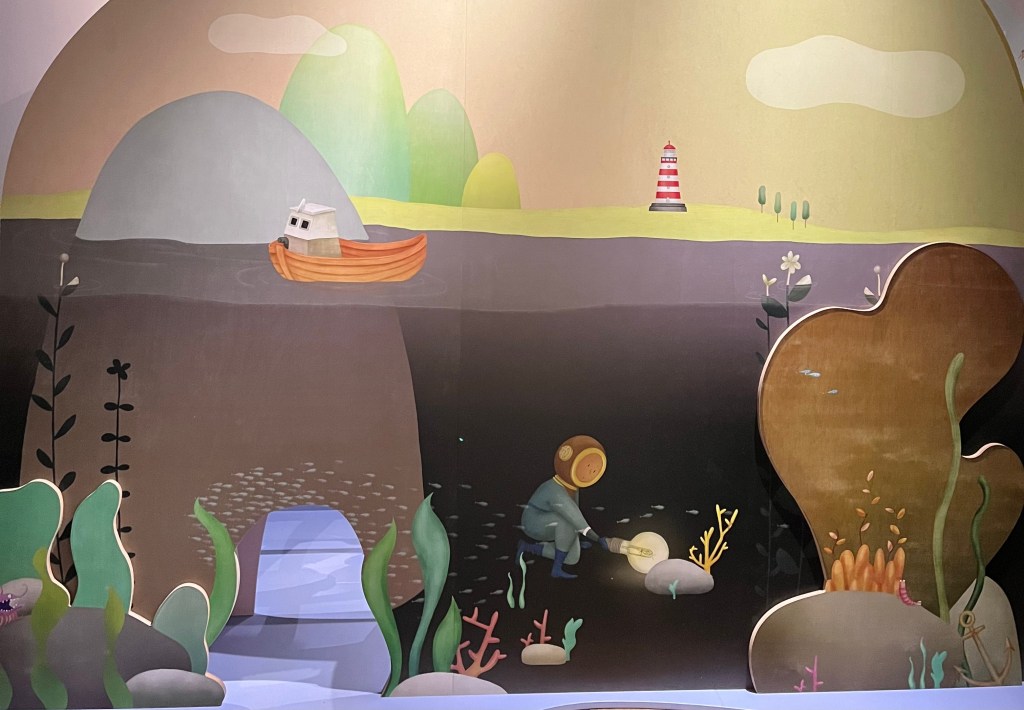
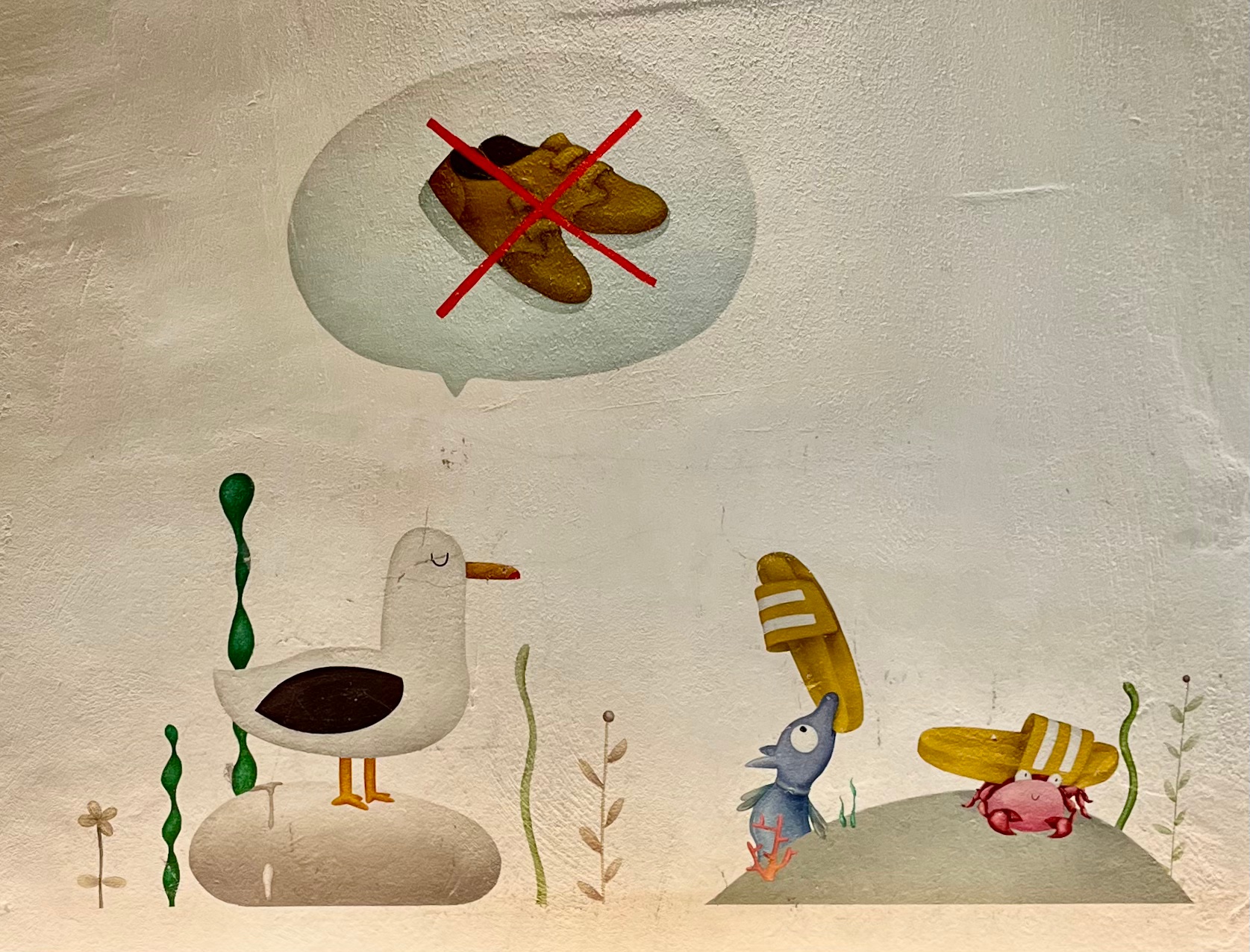
The maritime museum has three routes to visit. The East door, next to the shop and restaurant, gives access to the special room of Doris the undersea Diver, on the second floor. We were so happy to ‘discover’ this treasure because it provides a perfect baby experience. We visit regularly ! sometimes we are the only ones, and often there are children with their grand parents. You can spot the room with the sign requesting to leave your shoes outside.
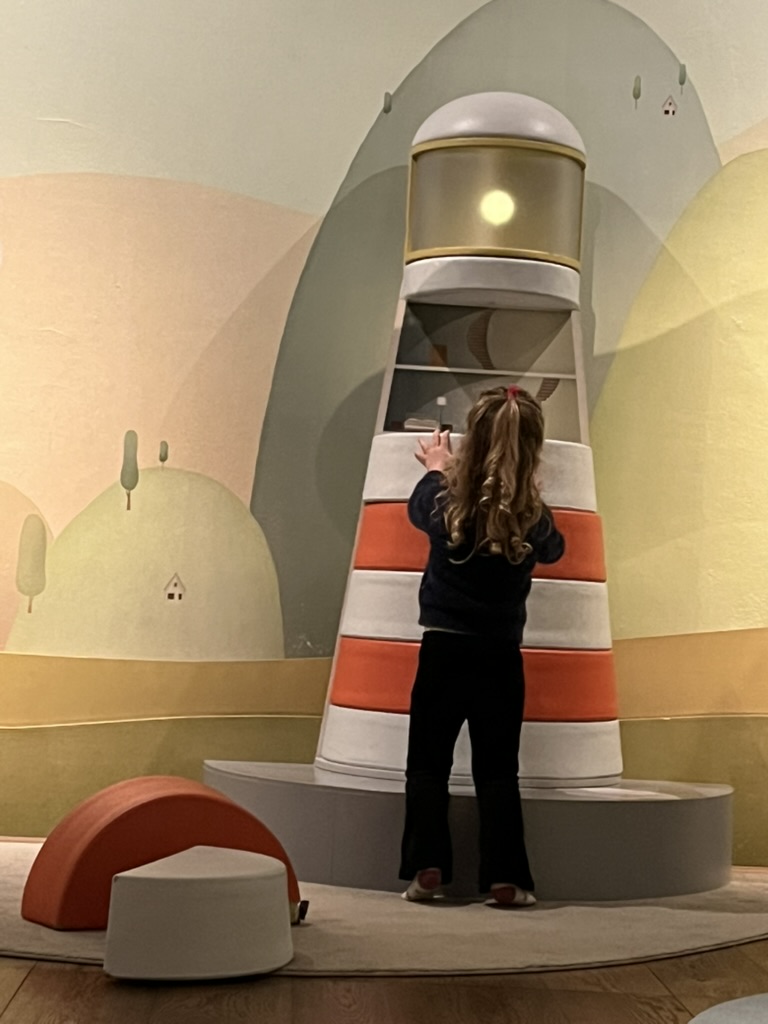
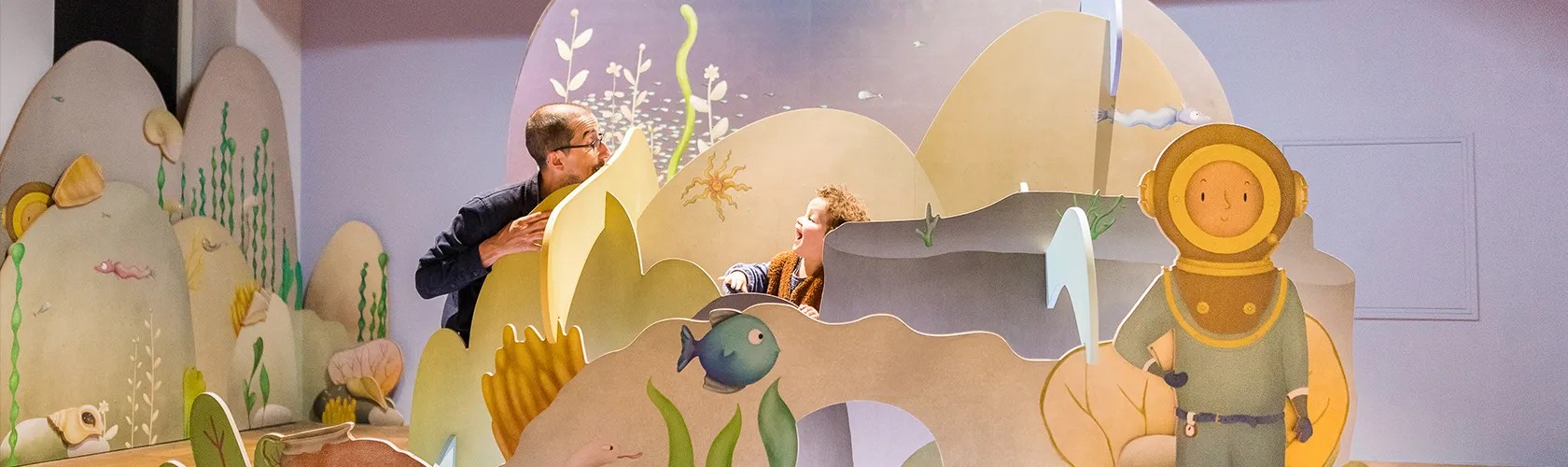
As you enter the room, there are a few elements for children of several ages: a corner with sounds behind sea curtains, a big ship to climb, a small ship following the lighthouse, the lighthouse that lights when all floors are well stacked, a small boat for sliding back and forth, a wall with figures on magnets, a crows nest, a couple puzzles with cubes, and a structure to discover and climb. All ‘islands’ have carpet ideal for babies to practice their crawling.
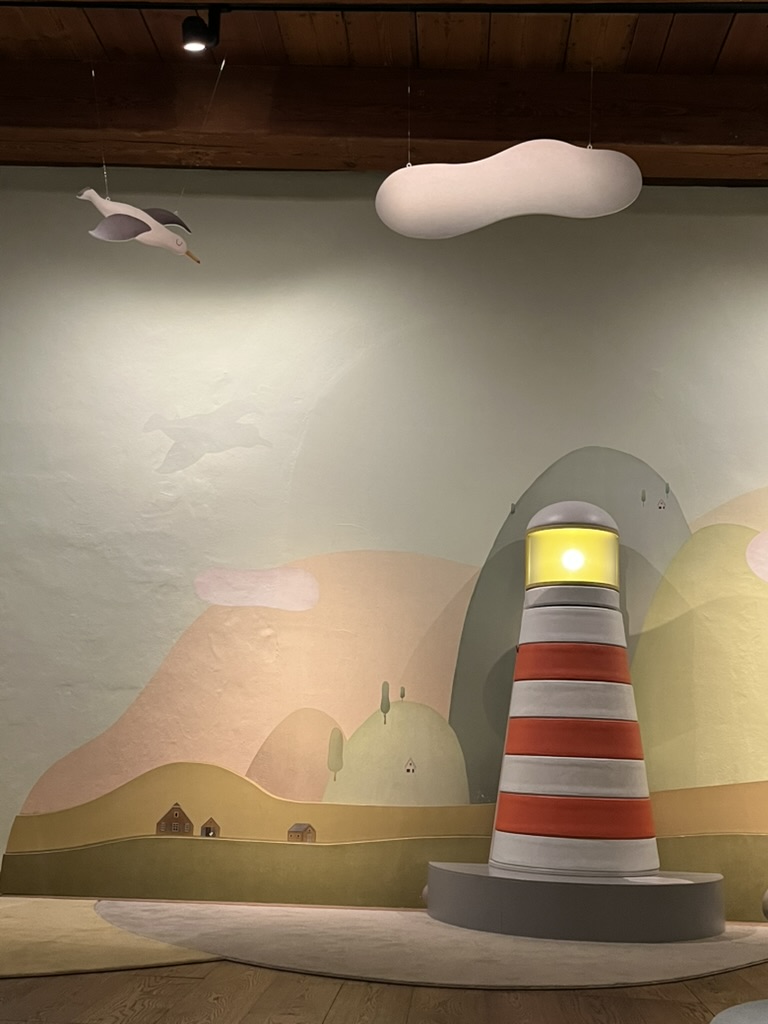
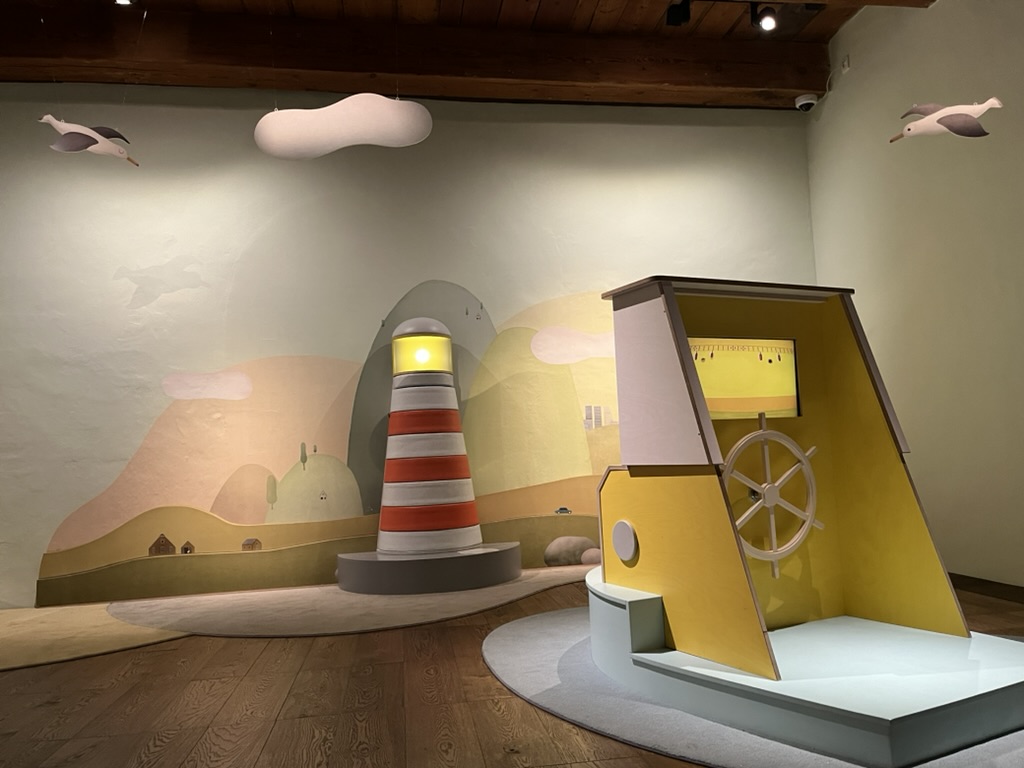
The space is small in the long winter days, as many families know to bring their children here for a safe, warm, play. It is so far the only museum we have encountered with a dedicated space with no shoes for babies.
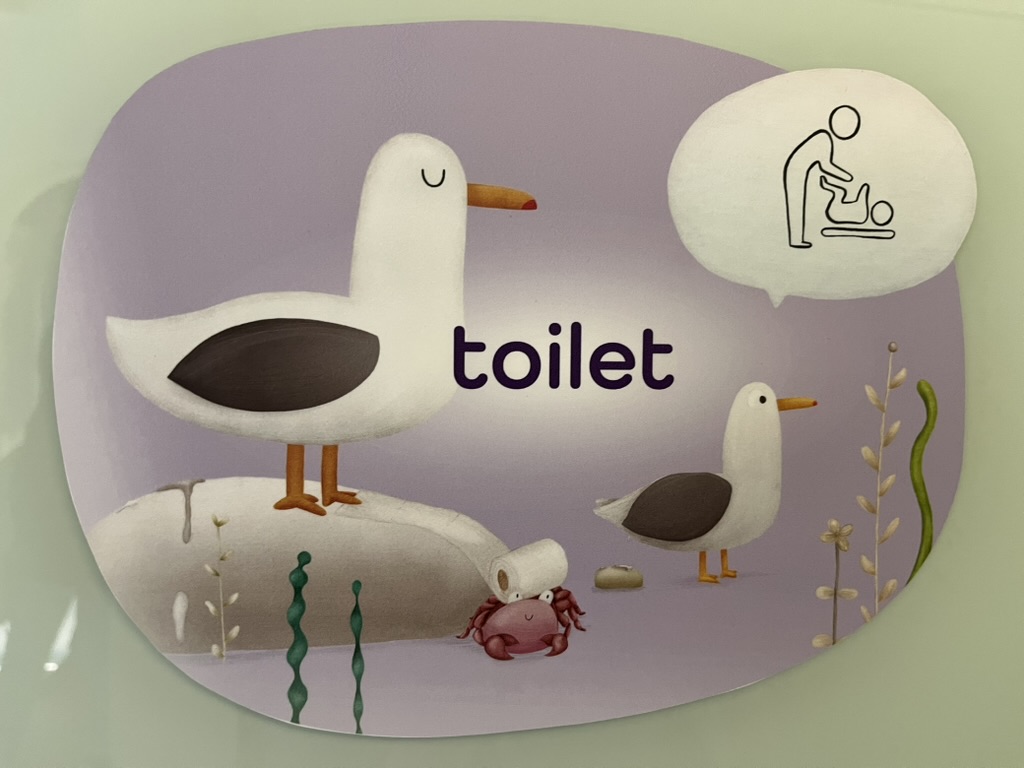
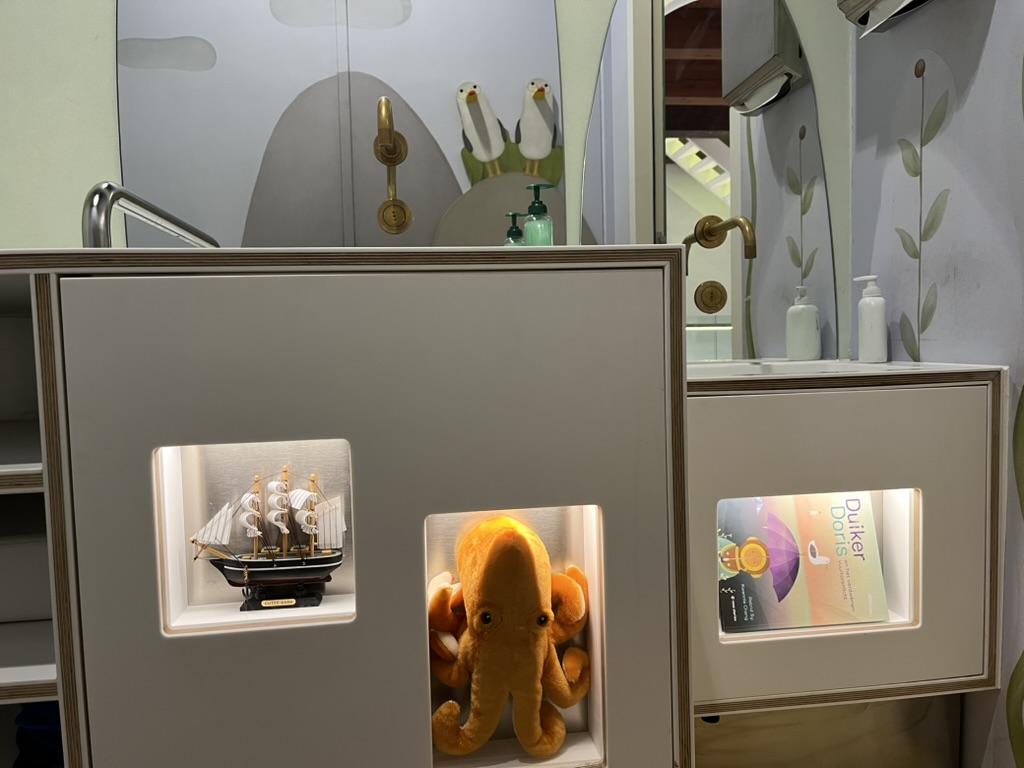
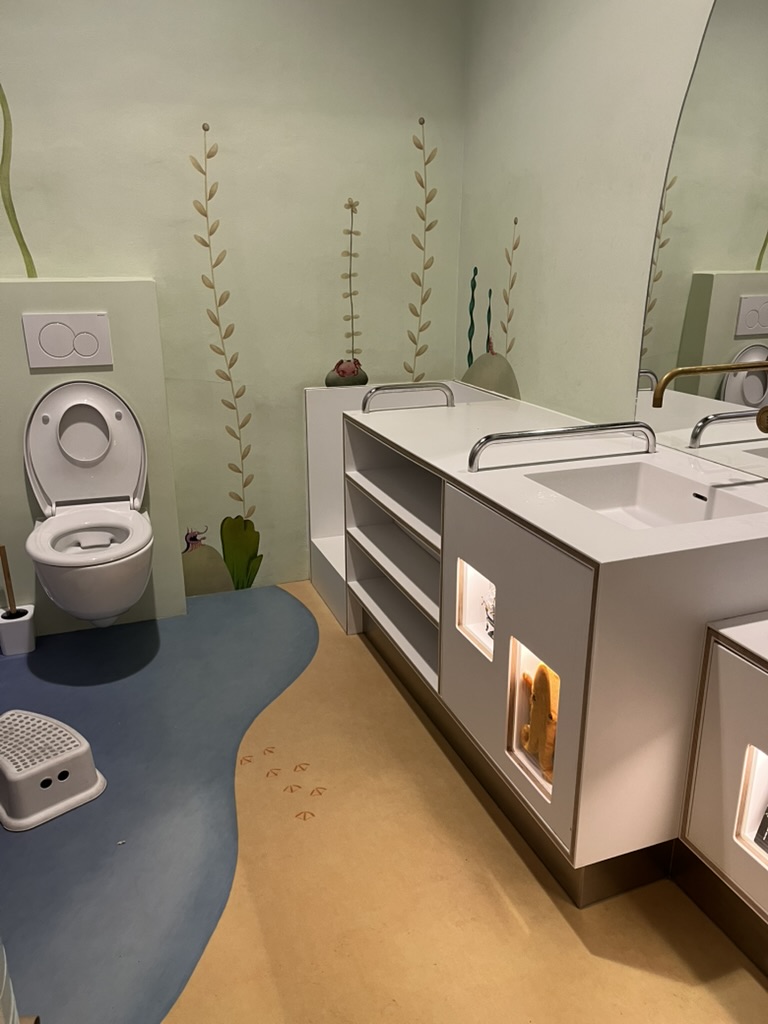
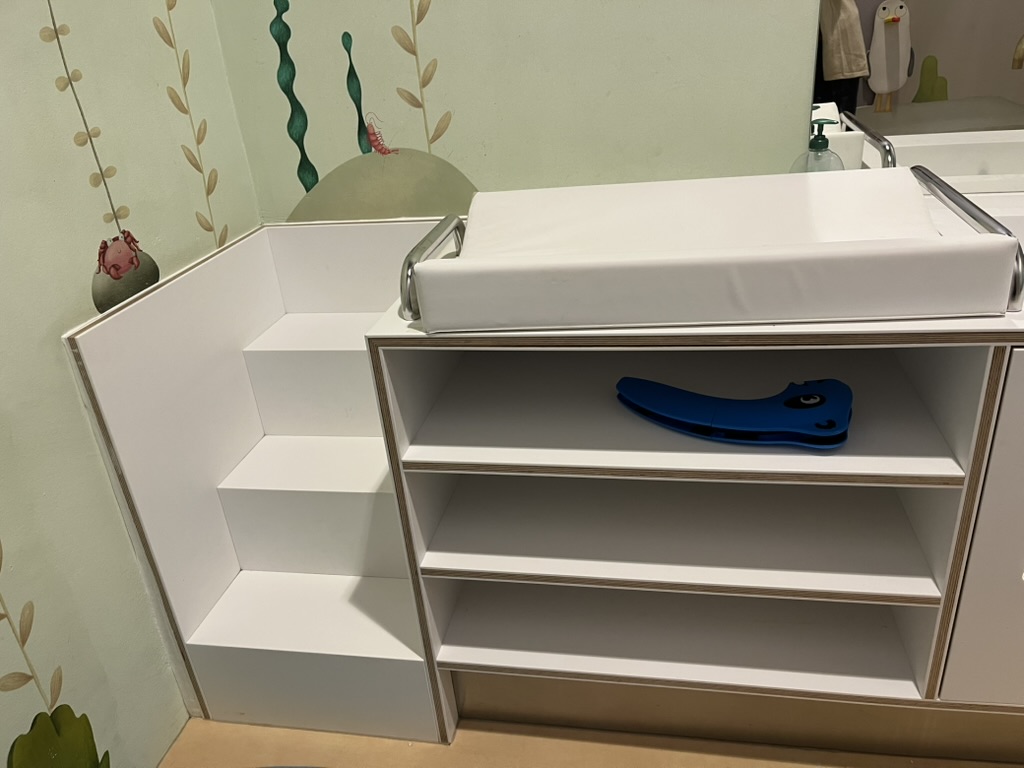
Something unique to this museum, and the second floor of the East wing, is the children’s toilet. It has stairs for children to get into their changing table, it has a small sink to wash hands, and it has a ring to make the toilet smaller, all nicely decorated. The only museum with such luxury comfort we have visited so far.
When we visited last, there was a magnificent exhibition of fashion ‘Oceanista – Fashion & Sea‘ (see a taste in this video). It had a section on Breton trendsetters. The characteristic blue lines originating from the region of Brittany in France, which was adopted in 1858 by the naval as their uniform. Dutch sailors also wore blue and white stripes between 1878 and 1965. Around 1900s, the motive was used in swimwear and beachwear. In the 1920s, Gabrielle ‘Coco’ Channel adopted the stripes in leisurewear, and Jean Paul Gautier adopted the motive in his designs. Most people now have something with the blue stripes.
It was nice to see a child’s sweater. This exemplar is from HEMA, and does not seem to fit the official requirements of having 20 blue lines and 20 white lines, given the small size.
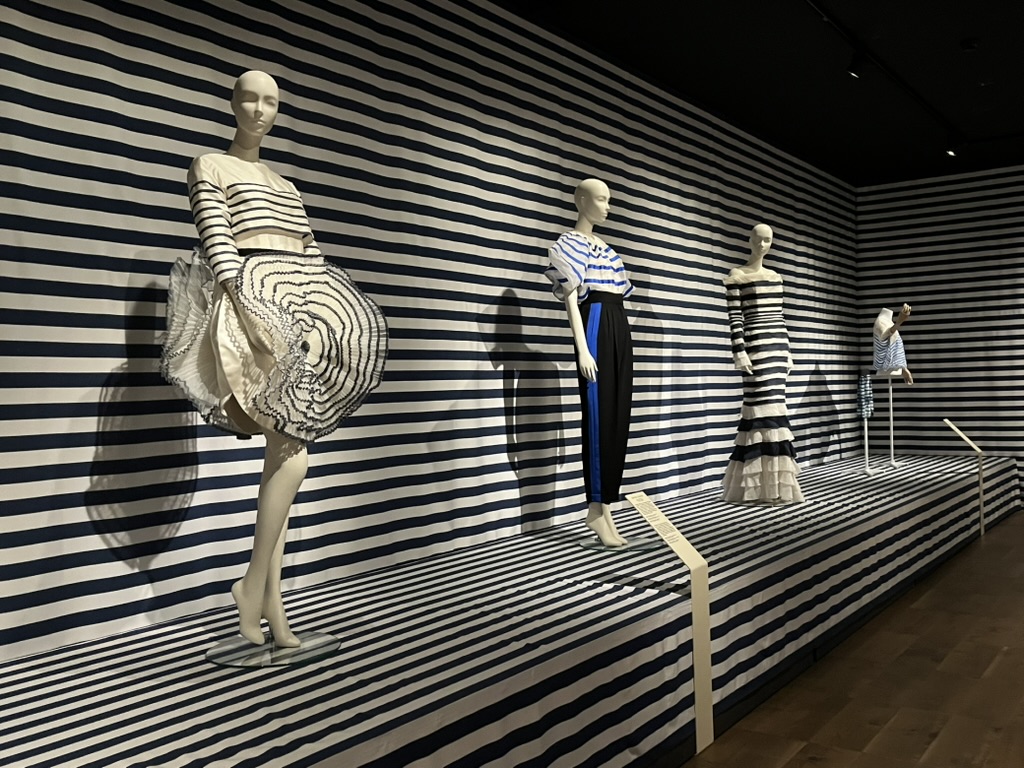
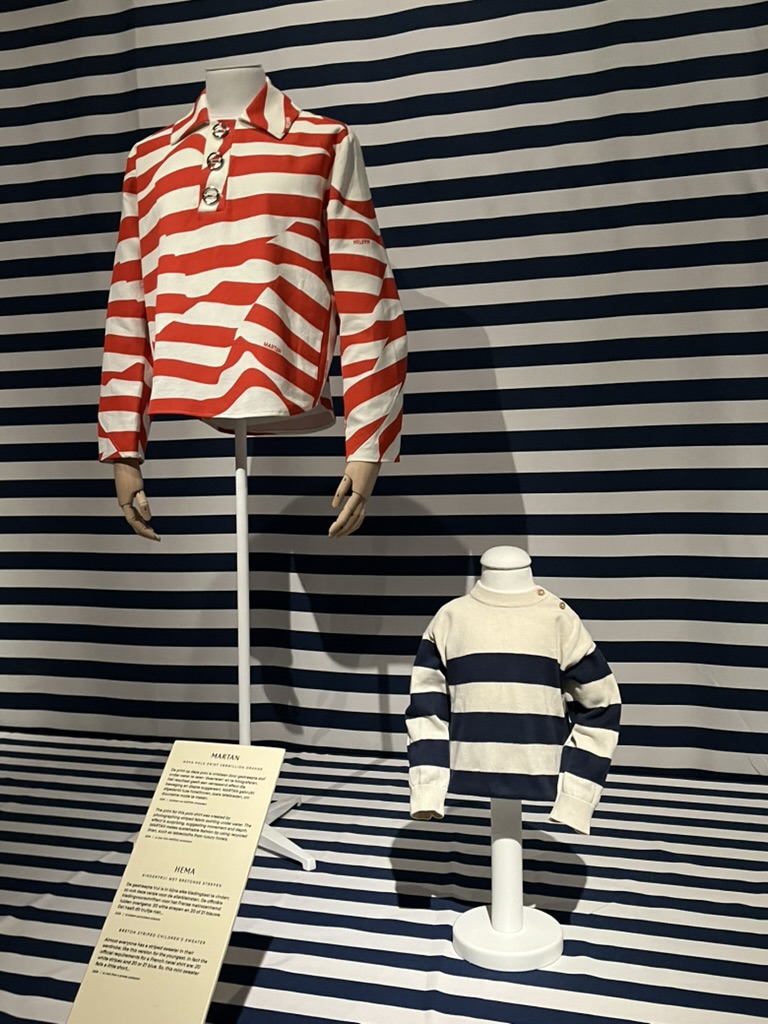
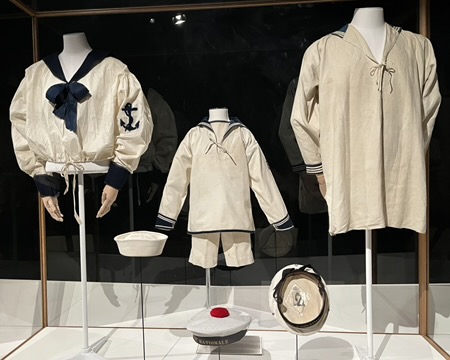
Next to top designers, there is another boy sailor’s suit and on loan from the Centraal Museum in Utrecht from 1910-1930.
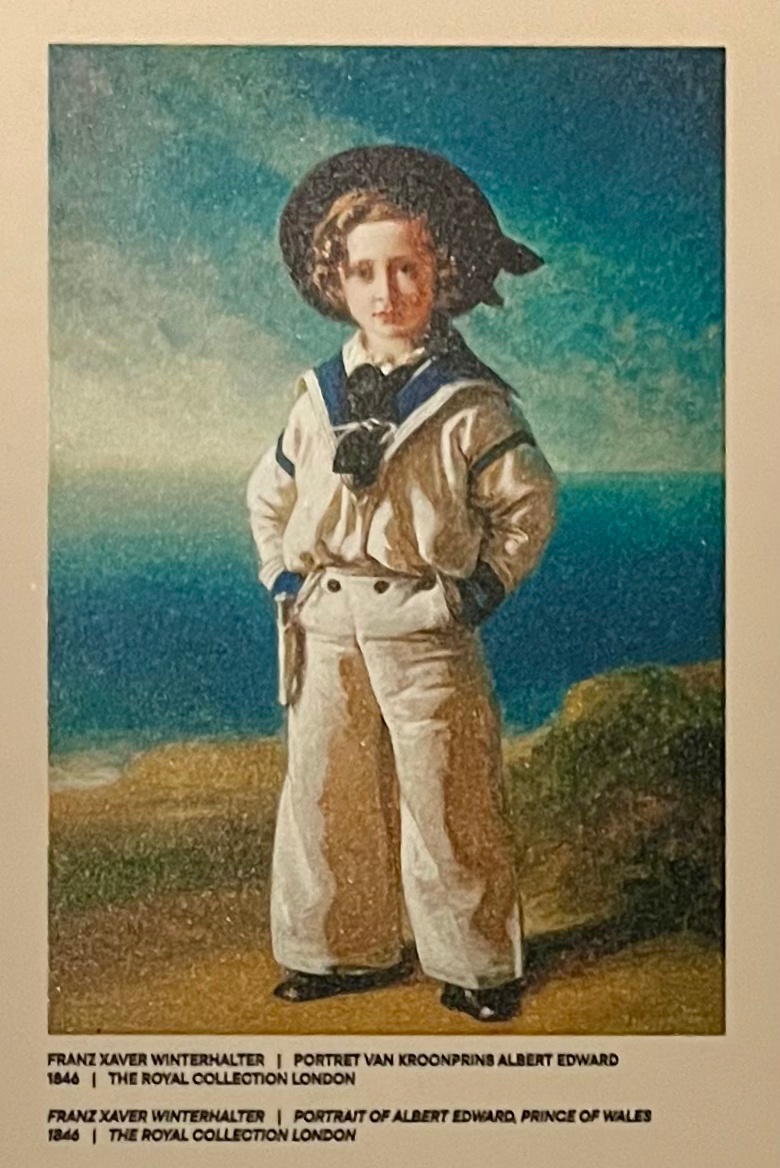
In 1846, Britain’s Prince Albert gave his wife Queen Victoria a portrait of their four-year-old son Albert Edward in a sailor suit. It became the height of children’s fashion. Around 1870, Dutch parents start dressing their children in sailor suits too, first for the beach and later on Sundays and holidays. Some children wore a sailor suit to school. In the 1960s, the distinction between Sunday best and weekday wear fades, and the popularity of the style declines.
Something special in this exhibition is the collaboration with ROC Amsterdam students. Students present their views on how to best contribute to a sustainable fashionable practice: 1. shop less (consider renting, exchanging, borrowing), 2. repair, 3. if you buy, select timeless pieces you can use for a long time. Students present their designs, give tutorials about hand made techniques, and invite visitors to rethink their sustainable dress practice.
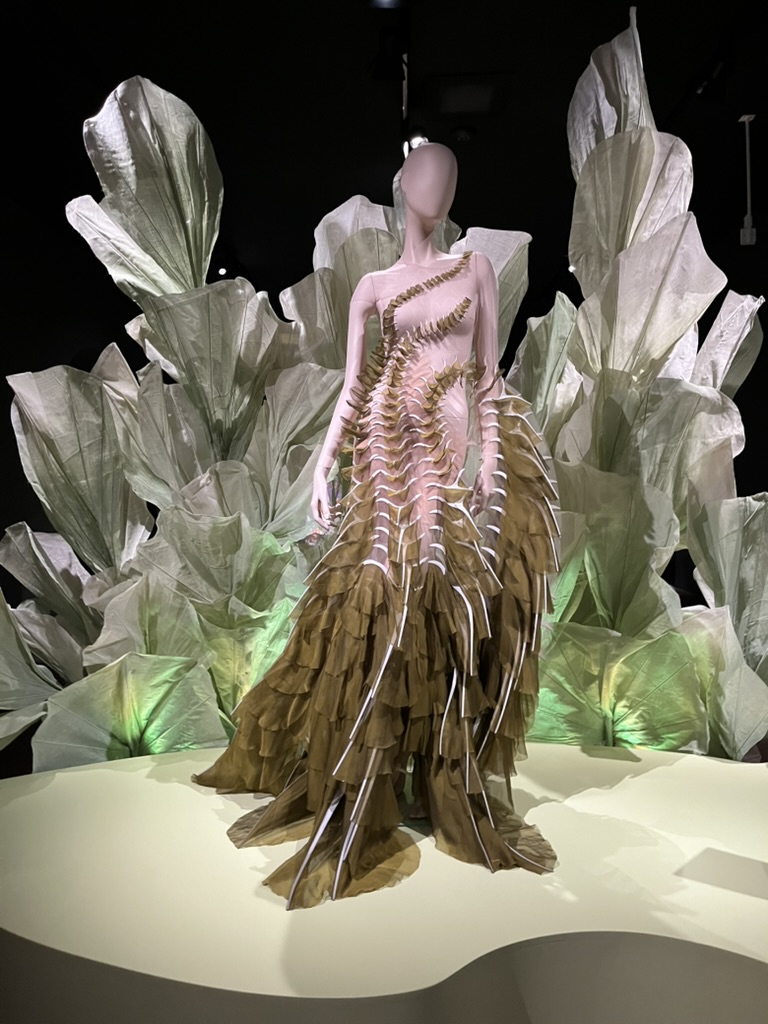
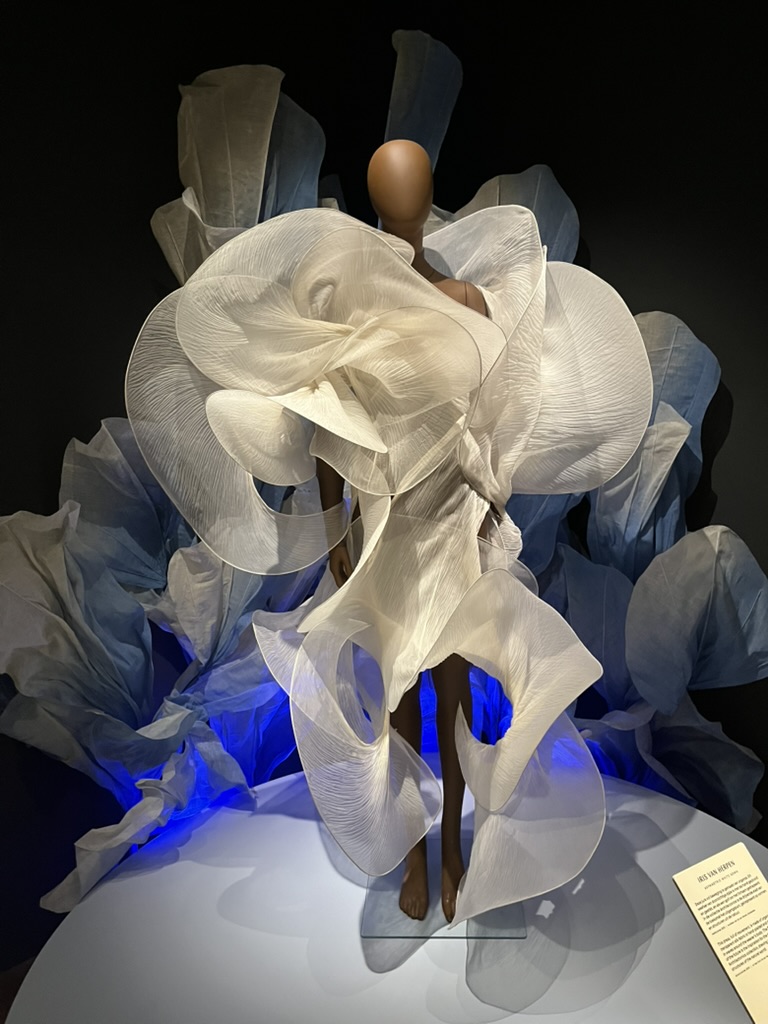
There is unfortunately nothing for children to touch, which would probably be also interesting for all other visitors. We would have recommended at least a selection of knots or some of the spectacular fabrics used. We looked quickly at the amazing dresses by Iris van Herpen before going back to Doris.
Main attraction
The amazing view of the city from the huge glass windows.
Unique feature
It has several ‘tracks’ to visit independently, including one for families. Only museum with an entire room dedicated to ‘the youngest’ visitors called Doris the Diver. There is a helpful page with information about families visiting.
General basics
- Entrance and place for baby wagon:
Entrance has automatic doors but exit requires pushing doors, which can be quite a challenge. Baby wagon is welcomed overall. Never a line in the lift. - Toilet facilities:
The best we have so far encountered in The Netherlands. Amazing large room considering children’s needs. - Breast feeding space:
There are lots of benches and spaces to find quiet. We have not yet required a dedicated room. - Staff and sphere:
Kind and helpful. We were directed to Duiker Doris when we arrived.

 Trilce Navarrete